
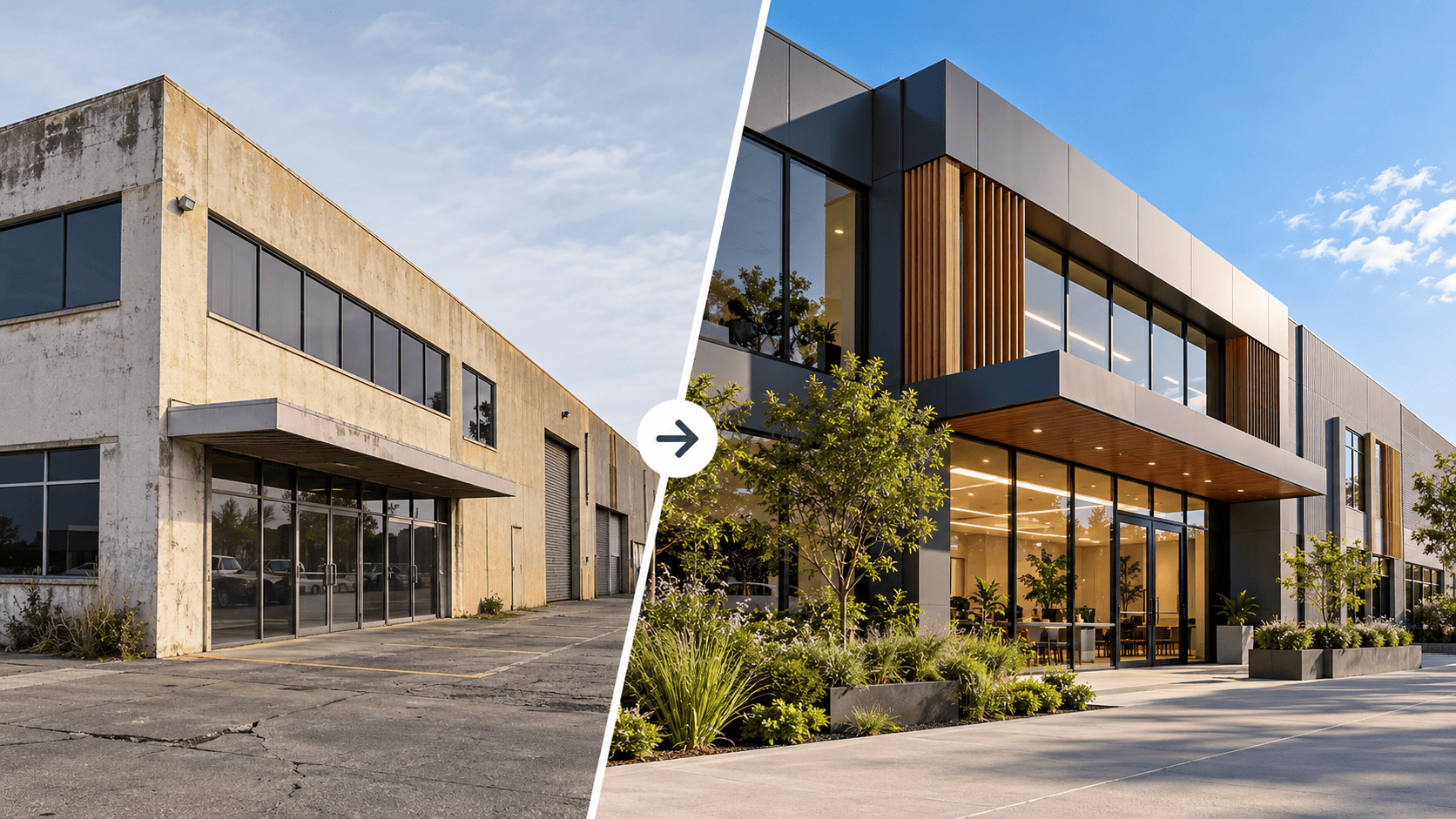
Older commercial buildings lose tenants quietly. Tired facilities, rising running costs and higher tenant expectations make vacancies harder to fill.
- Dated entries and amenities weaken first impressions.
- Inefficient services push up operating costs.
- Awkward layouts suit fewer occupants.
- Tenants compare your building with newer options.
RBi Architects has more than 30 years of experience in upgrading ageing commercial buildings. In this blog, we will understand how to refresh an older property so it attracts and keeps better tenants.
Focus: Making an older building appealing to long-term tenants.
Key Considerations: Targeted works, tenant needs, energy performance and flexibility.
Approach: A building review comes first, then refurbishing an older commercial property follows tenant priorities.
Professional Insight: RBi Architects, as commercial property architects, bases plans on how occupants use the space.
Outcome: A building that keeps tenants longer.
What Signs Show That a Commercial Building Needs an Upgrade?
Tenants moving to newer premises, slow lettings and steadily rising maintenance costs are the usual warning signs. Worn finishes, ageing services and layouts that no longer suit occupants add to the problem. Targeted commercial building upgrades are often enough to correct these, so a full rebuild is not always required.
| Sign | What it may indicate |
|---|---|
| Lettings taking longer | Presentation or facilities compare poorly with nearby buildings. |
| Repeated repair requests | Services or finishes are reaching the end of their life. |
| Rising energy bills | Lighting, glazing or air conditioning may be performing poorly. |
| Awkward floor plates | The layout is suited to only a few types of tenants. |
| Access complaints | Entries, lifts or amenities fall short of what tenants now expect. |
Prospects who decline an inspection usually give a reason to the leasing agent. Those comments are worth collecting, since they can point to problems before a formal audit does.
Plan Your Building Upgrade
Which Commercial Building Upgrades Matter Most to Long-Term Tenants?
Tenants stay in buildings that work smoothly from day to day. Dependable services, usable layouts, good light and air, simple access and well maintained amenities count for more than cosmetic touches. Items that affect daily use should be fixed first, and presentation can follow.
Office Functionality
Office building architects study how teams really work, from meeting spaces and storage to cabling and quiet zones. Improving these areas can lift usability more than a new lobby finish.
- Services: Air conditioning, lifts and power need to be dependable.
- Amenities: Bathrooms, kitchens and end of trip facilities shape daily impressions.
- Access: Clear entries and step free routes assist every visitor.
- Comfort: Daylight, ventilation and acoustics influence how long people want to stay.
Layouts for Different Occupants
Commercial property designers can plan floor plates that divide cleanly for several tenants or combine for one larger occupant. That flexibility widens the pool of tenants when a lease ends.
How Can Building Design Improve Tenant Experience and Operating Efficiency?
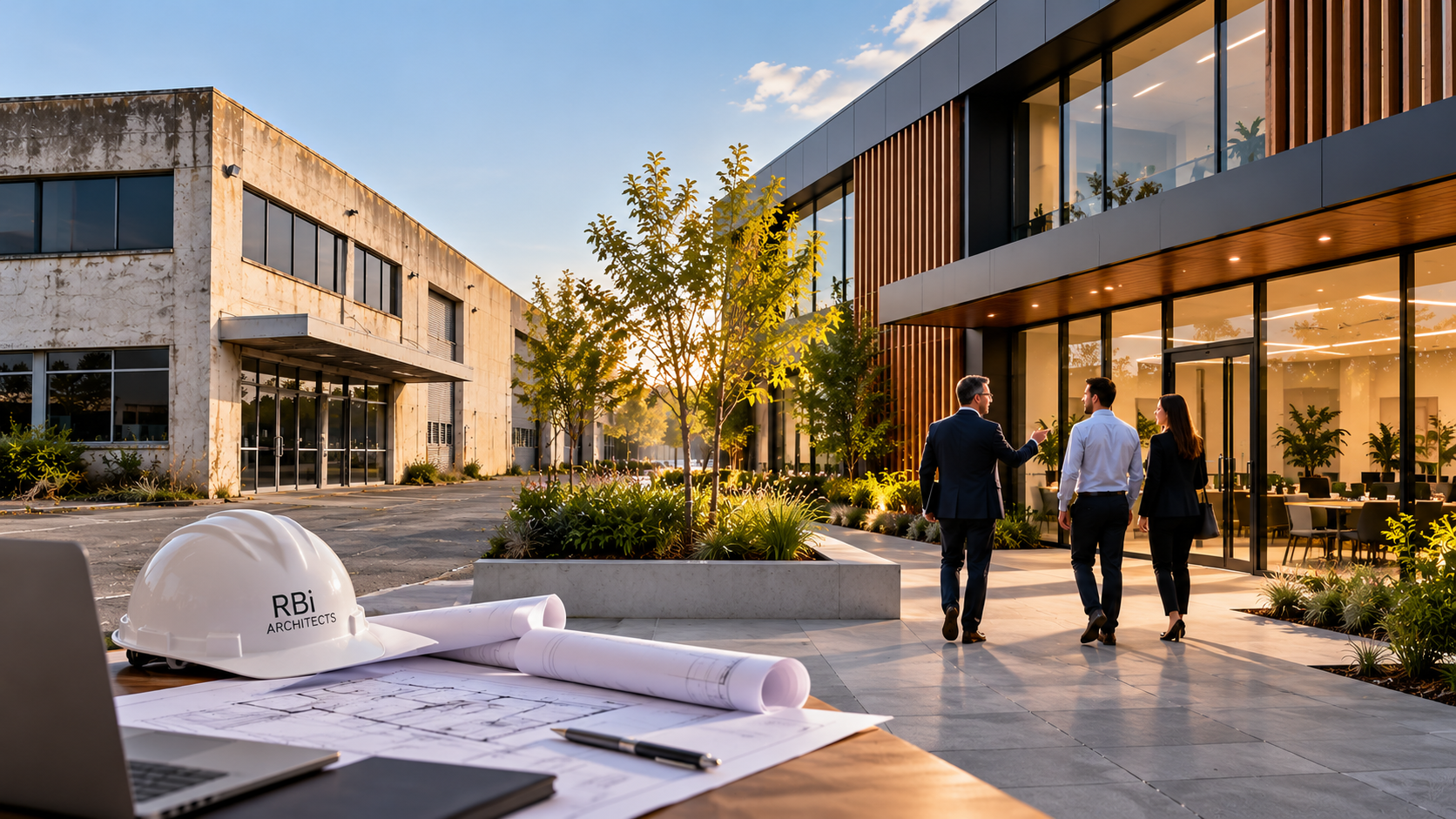
Good design makes a building easier to use and cheaper to run. Natural light, efficient services, sensible circulation and flexible floor plates improve comfort and reduce waste. Planning for disruption matters too, because noisy works can frustrate tenants and cost owners income.
| Design move | Tenant benefit | Owner benefit |
|---|---|---|
| Daylight and outlook | Brighter, more comfortable workspace | Stronger leasing appeal |
| Efficient lighting and services | Better comfort | Lower running costs |
| Flexible floor plates | Room to reconfigure | Easier re-letting |
| Improved facade and entry | Better first impression | Stronger streetscape presence |
RBi Architects focuses on high performance, sustainable design and on bringing the outside in. Local commercial building designers in Melbourne also understand how climate, council requirements and neighbouring development shape the options.
Income is protected by good staging. Noisy work can be scheduled for quieter periods and access routes kept open, so tenants are more likely to stay through the works.
What Should Owners Assess Before Starting a Commercial Refurbishment?
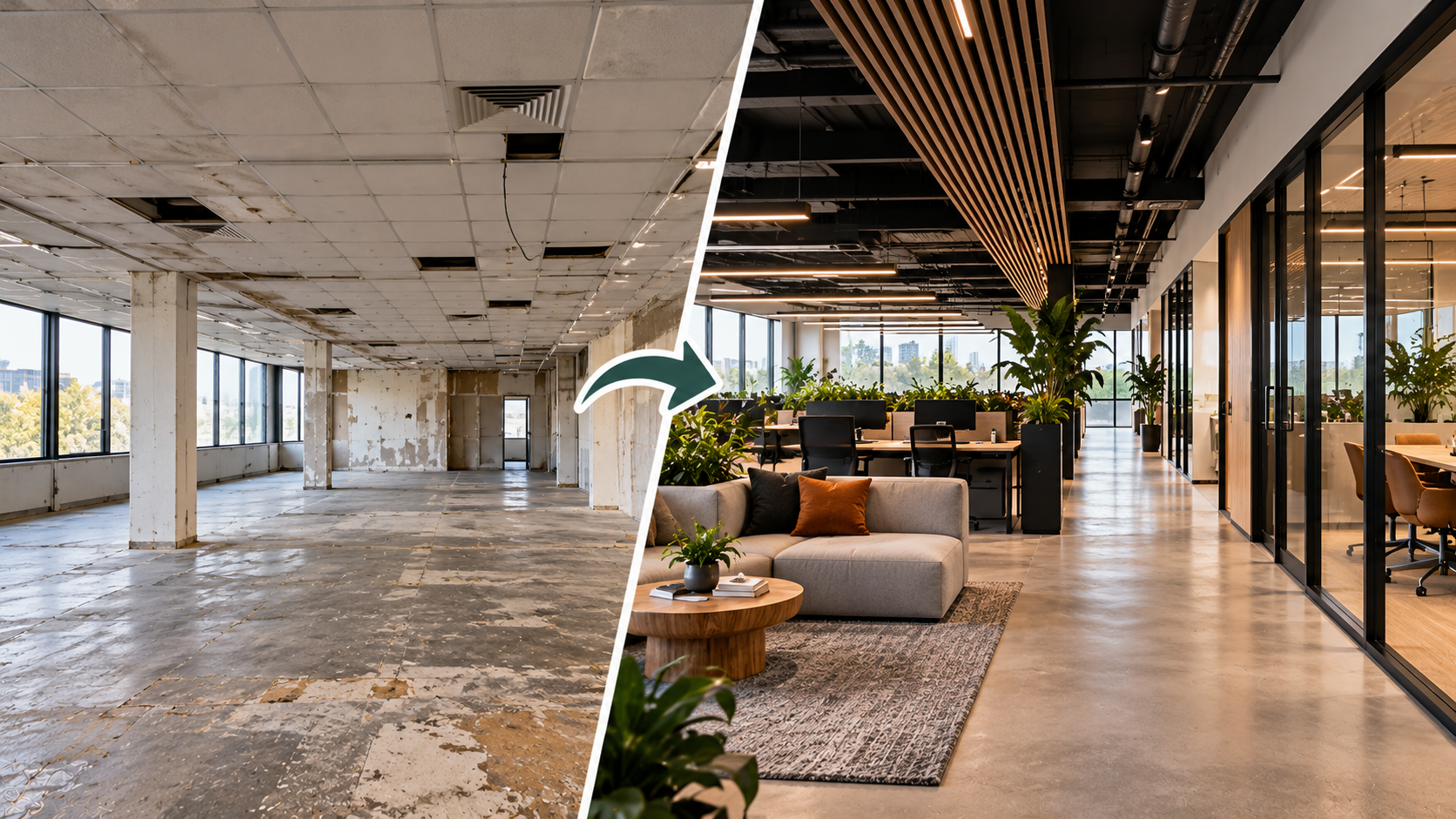
Before committing, the building’s condition, compliance obligations, scope, budget, staging and impact on current tenants should be assessed. That review shows which works matter most and stops money going to items tenants rarely notice. An independent commercial architectural firm can carry it out before any design begins.
- Building condition: Structure, facade, roof, services and finishes are inspected.
- Compliance: Accessibility, fire safety and energy requirements that may apply are reviewed.
- Scope and budget: Works are ranked by tenant impact and cost.
- Staging: Works are sequenced so occupied areas can keep operating.
- Tenant impact: Noise, access and lease obligations are considered.
The facade tends to get attention first because it is visible. Services and compliance items can shift the budget, so those are better checked before anything else.
Start With A Building Review
How Can Strategic Planning Help Protect Long-Term Property Value?
Staged planning protects value by spreading cost, keeping the building let and leaving room for future tenant needs. Coordinated commercial development planning ties design, approvals, costs and construction into one program, so decisions made now still suit the property years later.
- Do now: Safety, compliance, failing services, entries and amenities.
- Stage next: Layout changes and fitouts timed to lease expiries.
- Plan ahead: Allow for future services, tenant growth and sustainability upgrades.
- Maintain: Set a schedule so new work stays in good condition.
Staged commercial building improvements let owners fund works as leases roll over. RBi Architects supports projects from inception through design, construction documentation and contract administration, so one team follows each decision through.
Plan Your Upgrade Program
Conclusion
A considered commercial building refurbishment makes an older property more functional, comfortable and appealing to tenants who want to stay. Assess first, fix what affects daily use and stage the rest. RBi Architects supports commercial projects from planning and design through construction documentation and contract administration. If you are weighing options for your property, get in touch to discuss your project.
FAQs
How often should an older commercial building be refurbished?
There is no fixed interval. Timing depends on building condition, tenant expectations and lease cycles. Many owners review the property every few years and plan works around lease expiries. A condition review shows whether the building is holding up or slipping behind comparable premises.
Can commercial building upgrades be completed while tenants remain in the property?
Often, yes. Works can be sequenced area by area, with agreed work hours, protected access and advance notice of shutdowns. Noisy work or service interruptions may need to happen after hours, so discuss the program with tenants early.
What should property owners assess before budgeting for a refurbishment?
Budget beyond construction. Allow for a condition report, professional fees, approvals, a contingency and any rent lost during works. Obtain cost ranges for each item, because that shows which upgrades give the strongest return before you commit funds.
How can owners prioritise upgrades when the budget is limited?
Ask which problems would make a tenant leave or a prospect decline. Fund those first, then split the remaining items into stages tied to lease expiries. Record deferred items so they stay on the maintenance plan.